

SusHi Tech Tokyo 2026 will be held at Tokyo Big Sight from April 27 to April 29, 2026.
Named after the initials of “Sustainable High City Tech Tokyo,” SusHi Tech Tokyo is Asia’s largest global innovation conference dedicated to shaping sustainable future cities.
It aims to build sustainable cities powered by high technology andinnovators from across the globe.
The event will see startups, investors, major corporations, universities, and other supporters, along with fast-growing companies possessing world-class technologies gather, connect, and collaborate.
Through these encounters and exchanges, this event becomes a platform for generating innovation and new actions that contribute to solving global challenges.
In this article, we speak with key venture capital leaders participating in SusHi Tech, exploring their expectations for this year’s conference and their perspectives on the potential of Japan’s startup ecosystem.
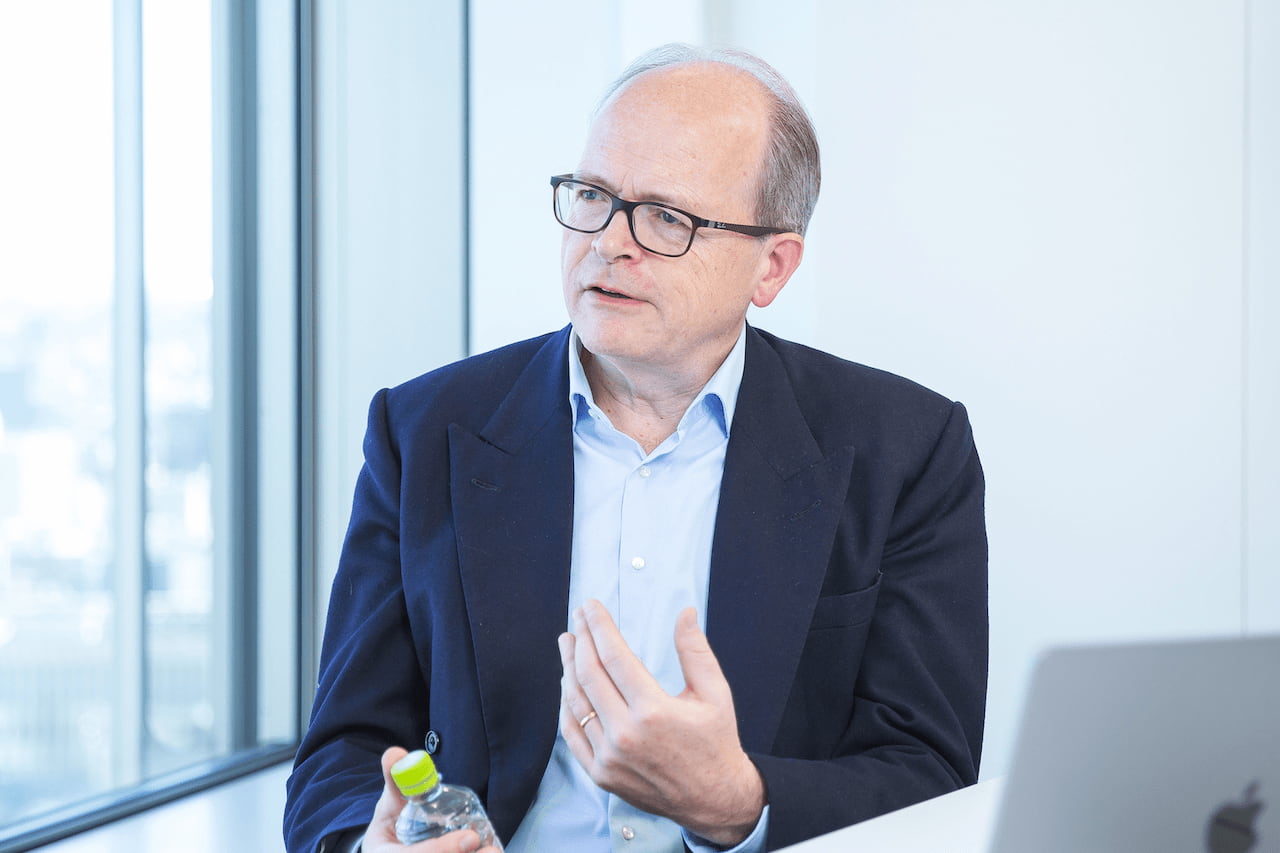
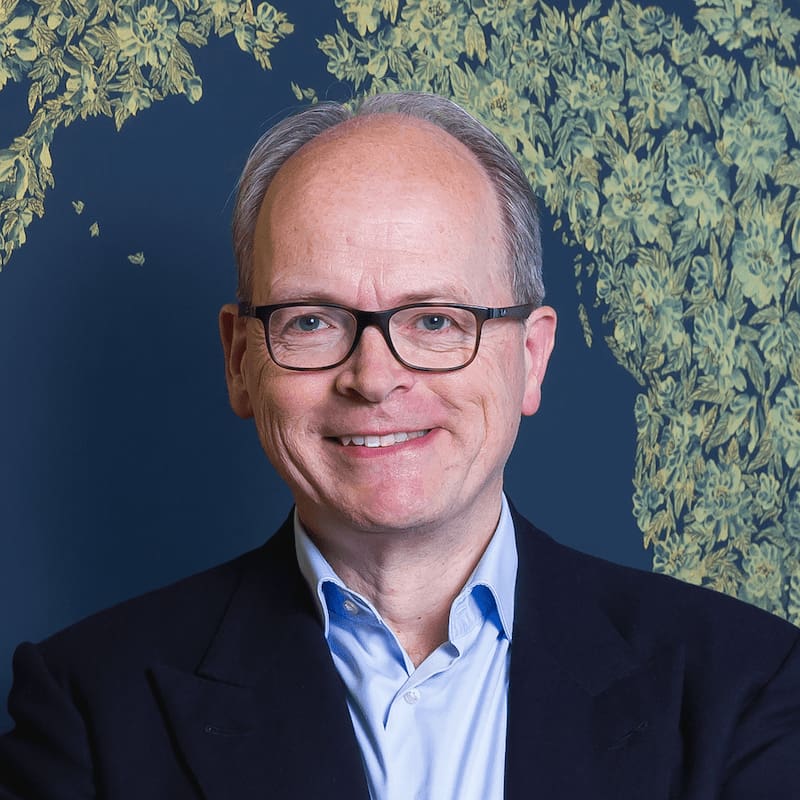
Simon Hirtzel is General Partner and COO of IQ Capital, a leading European deep tech venture firm. He drives the firm’s international strategy and supports founders globally — including growing engagement and partnerships between Europe and Japan’s innovation communities.
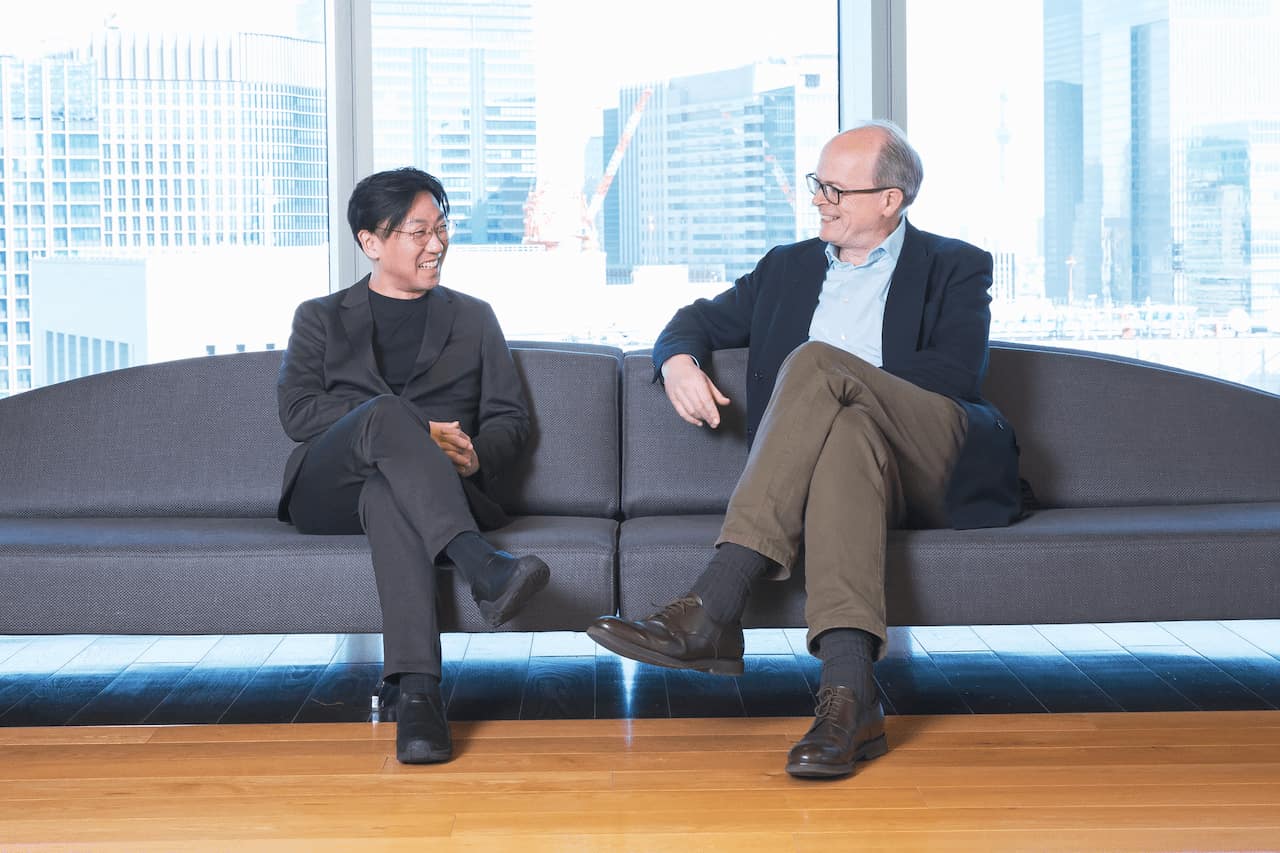
As the global business community sets its sights on SusHi Tech Tokyo 2026, attention is increasingly turning to leaders transforming advanced research into commercial scale. Among the most prominent voices in this field is Simon Hirtzel. Based in Cambridge, he has spent the past six years playing a leading role at IQ Capital, a firm that has shaped Europe’s deep tech evolution for over two decades.
In a wide-ranging, exclusive conversation, Hirtzel shared his reflections on what defines deep tech, the unique structural strengths of the European ecosystem, and why Japan has recently become integral to IQ Capital’s expansion strategy. This is not merely a story of venture capital, but a vision for how the next generation of global industry may be built through collaboration between East and West.
From Corporate CFO to the Frontlines of Innovation
Hirtzel’s transition to venture capital was informed by extensive experience in large-scale international business. Before joining IQ Capital, he served as a corporate CFO for a major international enterprise, overseeing 3,500 employees across 35 countries. Managing revenues of nearly three-quarters of a billion dollars, he gained a deep understanding of the structural and collaborative requirements for global growth.
“The primary draw of venture capital was the speed and scale of impact,” Hirtzel explains. “In a large corporation, success is often a function of process and incremental improvement. In contrast, a startup can move from inception to meaningful scale at remarkable speed. There is a profound sense of purpose in building an organization from scratch.”
Hirtzel emphasizes that the precision of talent acquisition is far more critical in the early stages of a deep tech venture.
“Large organizations can sometimes absorb less-than-optimal hires, but for the first ten members of a deep tech startup, talent is the single most important variable. Every hire is a strategic decision that determines the company’s trajectory for the next decade. It requires individuals capable of navigating the high volatility of the ‘zero-to-one’ phase.”
IQ Capital, established in Cambridge over 20 years ago, now manages approximately $1 billion. With a portfolio of over 250 founders across seven funds, the firm has navigated three full economic cycles by maintaining a disciplined focus on deep tech sectors, including machine learning, AI, and advanced engineering.
Defining Deep Tech: Moving Beyond the “Shallow” Surface
The term “Deep Tech” is frequently utilized in investment circles, yet Hirtzel advocates for a more rigorous definition that moves beyond simple negations. According to him, one of the most accurate — if somewhat unhelpful — definitions of deep tech is that it is “not shallow tech.
To illustrate, he contrasts contemporary deep tech with previous waves of venture financing—such as consumer models or delivery platforms—where technology served merely as a facilitator for the business model.
“Deep tech is characterized by inherent technology risk,” Hirtzel argues. “It rests on the belief that if the technology succeeds, it will address a critical problem in a large market, creating immense value. We are focused on solving problems that were conceptually impossible or commercially unviable just a few years ago.”
The European Advantage: A Maturing Ecosystem
Europe maintains a strong concentration of the world’s leading scientific and technological clusters. IQ Capital concentrates its investment activity on five primary hubs: the UK (Cambridge and London), Switzerland (specifically around the world-renowned research environment of ETH Zurich, the Swiss Federal Institute of Technology), Germany (Munich), and the Netherlands (Eindhoven and Delft). Hirtzel believes the European landscape has reached a clear tipping point in talent density.
“The liquidity of talent—specifically employees moving between billion-dollar companies—has quadrupled over the last decade,” he points out. “We are witnessing the rise of the serial founder in Europe—individuals who have experienced scale and are now applying those institutional lessons to deep tech. This has fostered a self-reinforcing network of experienced founders.”
Hirtzel identifies robotics, semiconductors, and power management as the core sectors where Europe holds a clear competitive advantage. He cites a recent investment in a robotics spin-out from Imperial College London as a prime example of the research-led innovation emerging from these hubs. The company focuses on enabling robots to understand human intent.
“The research focuses on whether a robot can learn from humans through observation,” Hirtzel elaborates. “The goal is for a robot to observe a task once and comprehend not just the mechanics, but the underlying intent. This is the type of innovation IQ Capital seeks to support.”
He also highlights “pull factors” in the modern economy—such as decarbonization and supply chain resilience—which are generating substantial demand for these advanced hardware and robotics solutions.
“We recently evaluated a company that spent nine years developing cutting-edge genetic innovation to transform banana production,” Hirtzel shares. “While we might not have considered such an investment five years ago, we now recognize the potential for deep tech to modernize traditional global industries. It is no longer merely a ‘push’ of science; it is a response to urgent industrial requirements.”
IQ Capital’s Focus: Infrastructure for an Automated World
A key area of strategic focus for IQ Capital is the core infrastructure supporting the next wave of industrial innovation: power and thermal management. As AI and robotics become pervasive, managing power density has emerged as a primary engineering challenge across multiple sectors.
“Power management is a fundamental component of the deep tech landscape,” Hirtzel emphasizes. “One of our portfolio companies has developed technology that enables lithium-ion batteries to fully recharge in under five minutes. This is particularly vital for logistics centers, where robots must operate 24/7. In practical terms, this means building the energy infrastructure for an automated world.”
Hirtzel adds that thermal and power management systems are particularly vital for data centers. Solving these fundamental engineering challenges enables the broader sector to scale.
Building the Bridge: The Strategic Pivot to Japan
One of the most consequential strategic shifts for IQ Capital in recent years is its deepening commitment to Japan. Historically viewed as a UK-centric investor, the firm’s latest fund—Fund 5—marks a transition to a global mandate, with investments split 50-50 between the UK and the rest of the world.
This commitment was driven by a realization within the firm’s own portfolio. Hirtzel knew that a quarter of their active companies were already engaged in Japan through partners, customers, or capital sources.
“The realization was immediate,” Hirtzel recalls. “Japan is already deeply integrated into the global technology ecosystem. Given the level of engagement already present in our portfolio’s activities in Japan, it was imperative that we establish a presence there to support our companies and identify the next generation of Japanese innovators with international ambitions.”
To execute this vision, IQ Capital appointed Naoki Kamimaeda as a venture partner. Kamimaeda, who previously spent a decade overseeing European operations for Global Brain, serves as the primary conduit between European and Asian deep tech networks.
“Naoki’s role is to facilitate a two-way corridor,” Hirtzel outlines. “In just six months, he has enabled 25 high-level introductions between our European portfolio and Japanese industrial leaders. Simultaneously, the firm is bringing the IQ Capital approach to Japanese startups seeking to scale into European and North American markets.”
He sees a marked shift in the mindset of Japanese founders.
“The traditional narrative of Japanese startups being satisfied with domestic exits is shifting. We see a high level of ambition among founders who recognize that deep tech is a global endeavor and are seeking international partners to facilitate their expansion beyond domestic borders.”
Synergy of Strengths: Industrial Integration and Deep Science
Hirtzel identifies a natural synergy between Japan’s industrial base and Europe’s research-led deep tech. He notes that sectors such as robotics and semiconductors are areas where both regions possess world-class expertise and technical ties.
“Japan remains a global leader in manufacturing and hardware engineering,” he observes. “There are strong technical ties between ecosystems like the Netherlands and Japan, particularly in the semiconductor sector. Our objective in Japan extends beyond capital; we seek to integrate these industrial capacities into our global network.”
Hirtzel emphasizes that Japan’s role is increasingly important because deep tech must eventually operate in the physical world.
“Success in deep tech requires the seamless integration of hardware and software,” Hirtzel stresses. “Portfolio companies increasingly view Japan as an essential partner for scaling their technologies in real-world industrial environments.”
SusHi Tech Tokyo: A Catalyst for Long-term Alignment
IQ Capital maintained a commanding presence at SusHi Tech Tokyo 2025 as a featured speaker. Rather than viewing it as a conventional conference, Hirtzel regards the event as a strategic catalyst for fostering international alignment.
“The quality of the event signaled Japan’s commitment to global innovation,” Hirtzel observes. “It attracted a sophisticated audience of investors, founders, and corporate leaders. Engagement from both the private sector and government was particularly strong.”
He expects the 2026 edition to expand further. Momentum is building — not through spectacle, but through sustained relationship-building.
Strategic international platforms play a critical role in venture capital. Trust develops over years, not days. Events like SusHi Tech Tokyo provide a structured environment where those relationships can begin, deepen, and evolve.
For IQ Capital, the Europe–Tokyo corridor is no longer conceptual. It is operational — and increasingly central to its long-term strategy.
About Simon Hirtzel
Click here for SusHi Tech Tokyo 2026 event details