

SusHi Tech Tokyo 2026 will be held at Tokyo Big Sight from April 27 to April 29,2026.
Named after the initials of “Sustainable High City Tech Tokyo,” SusHi Tech Tokyo is Asia’s largest global innovation conference dedicated to shaping sustainable future cities.
It aims to build sustainable cities powered by high technology and innovators from across the globe.
The event will see startups, investors, major corporations, universities, and other supporters, along with fast-growing companies possessing world-class technologies gather, connect, and collaborate.
Through these encounters and exchanges, this event becomes a platform for generating innovation and new actions that contribute to solving global challenges.
In this article, we speak with key venture capital leaders participating in SusHi Tech,exploring their expectations for this year’s conference and their perspectives on the potential of Japan’s startup ecosystem.
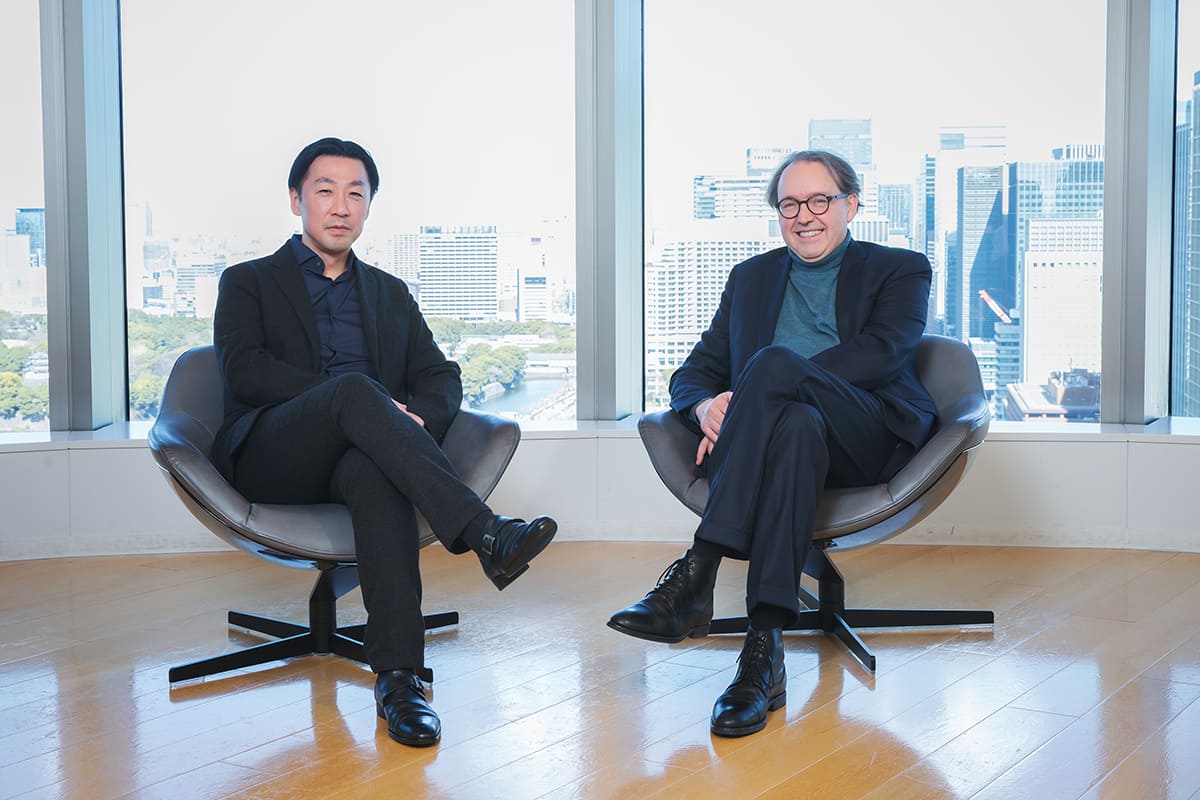
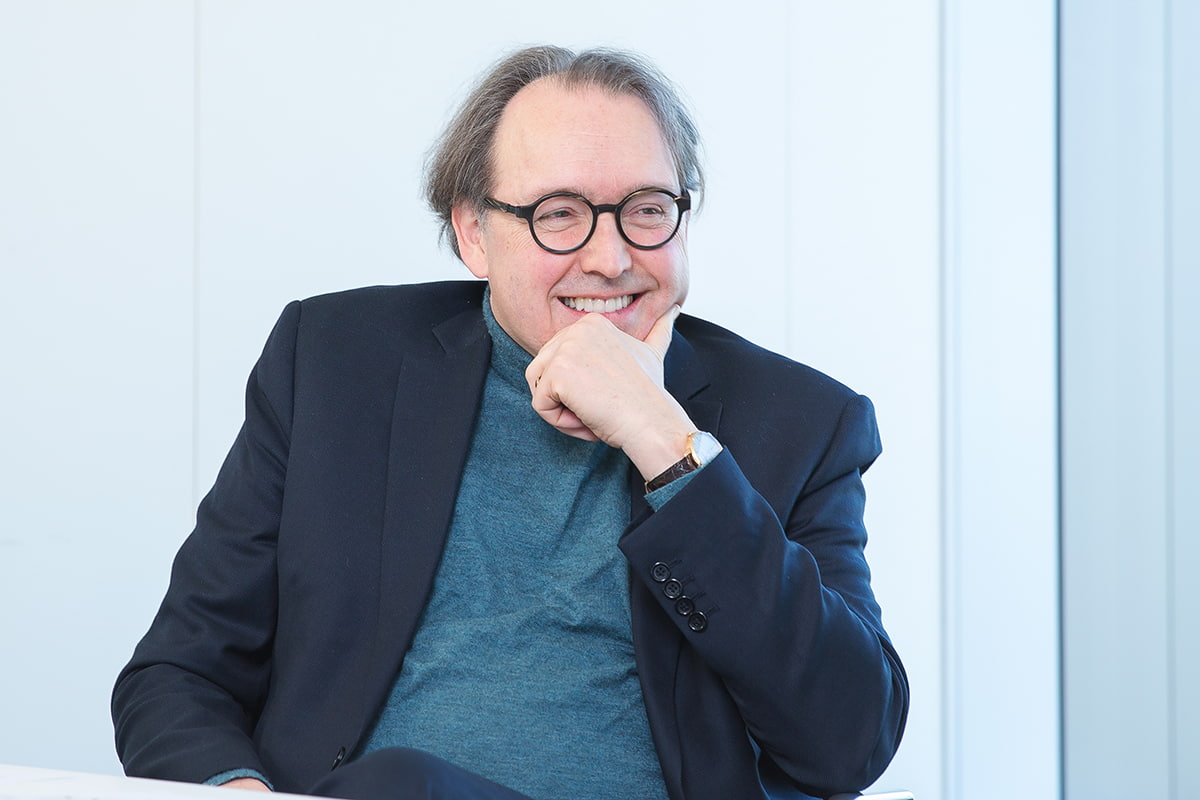
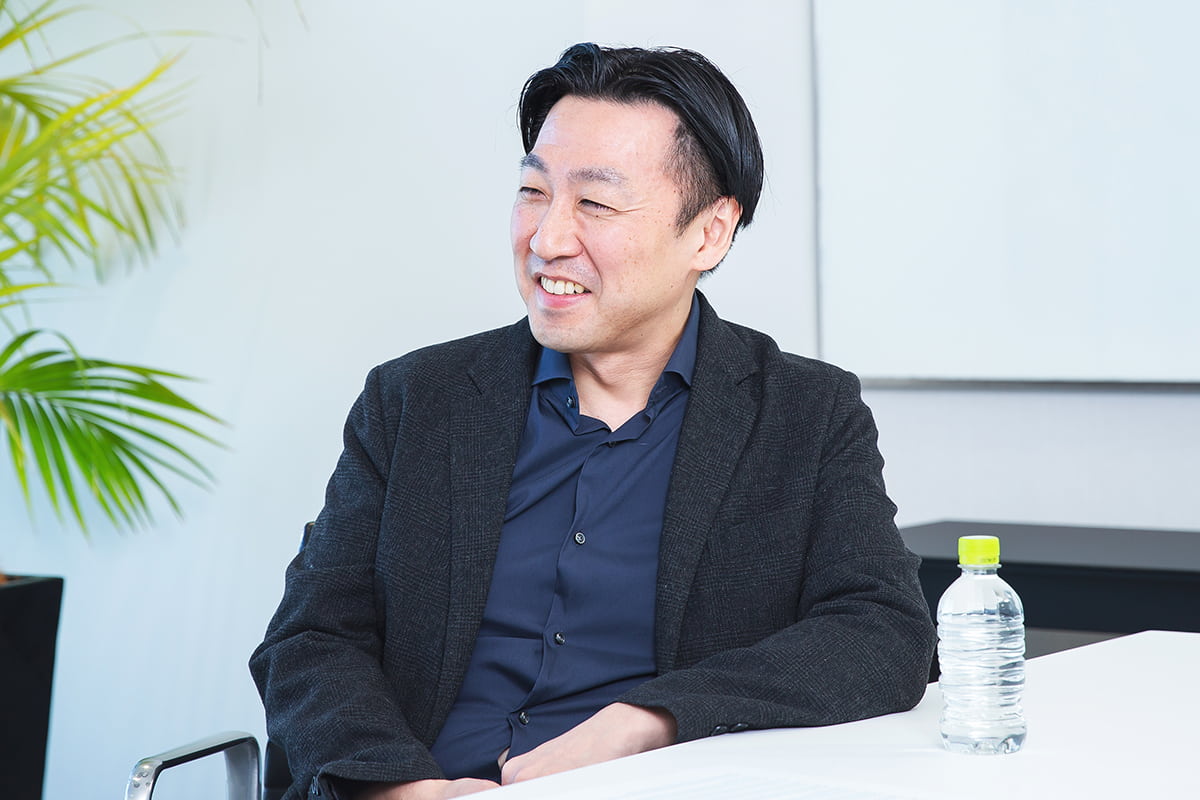
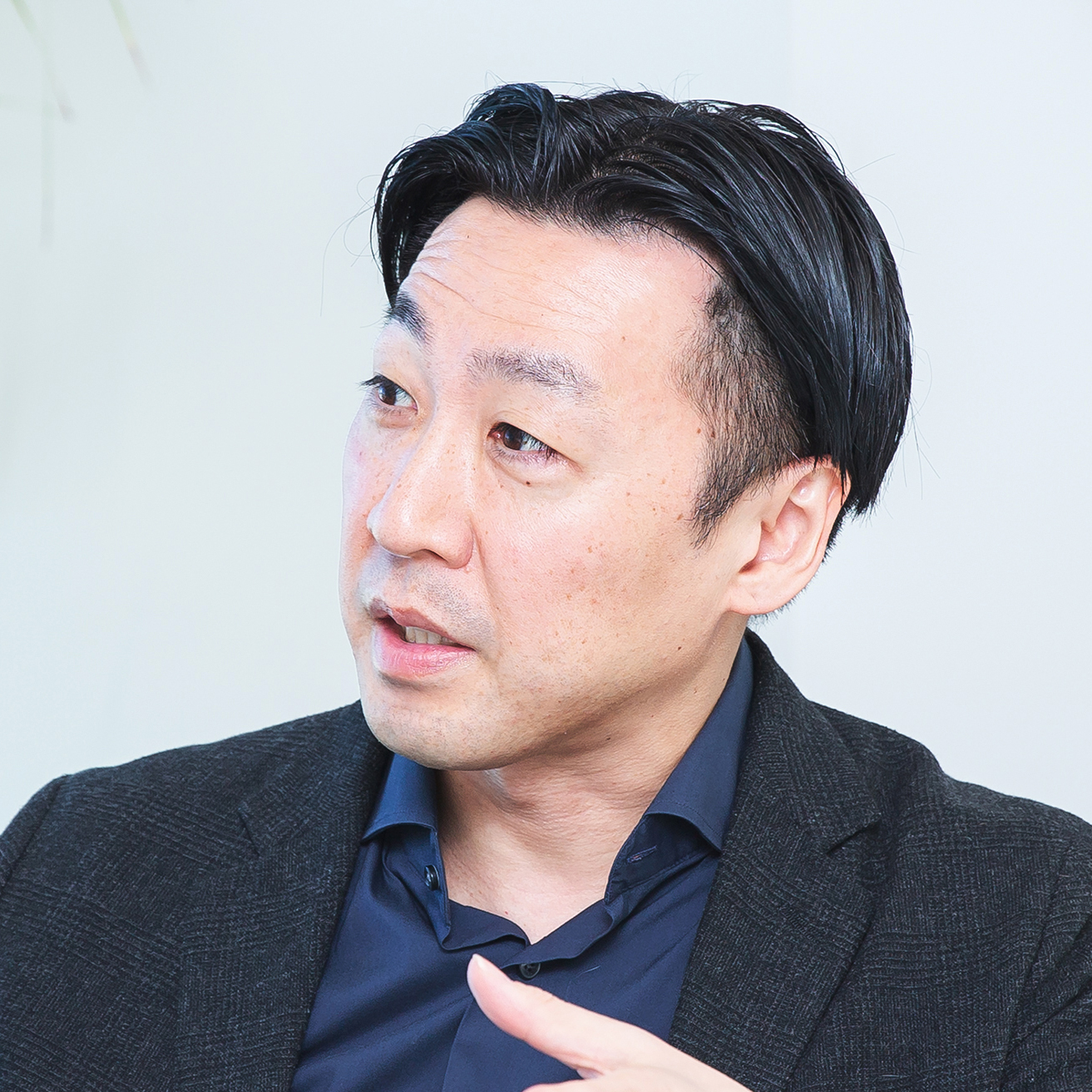
In anticipation of SusHi Tech Tokyo 2026, a strategic dialogue was held between Jean Schmitt, Founding President and Managing Partner of Jolt Capital, and Yoichi Morimoto, Executive Officer at HiJoJo Partners Inc. (former Goldman Sachs). The conversation arrives at a historic turning point: Jolt Capital, a private equity firm specializing in growth capital technology investment, has officially decided to establish a permanent presence in Tokyo. Founded in 2011, the firm combines a team of “Engineer-Investors” with its proprietary AI platform, Jolt.Ninja, to identify mid-sized firms and transform them into global “Sovereign Champions.” In this dialogue, Schmitt and Morimoto dissect the strategic reasoning behind Jolt’s entry into Japan and how its growth capital model can be applied to unlock high-value intellectual property on a global scale.
Defining the “No Man’s Land” and the Essence of Growth Capital
Yoichi Morimoto: Jean, it is a pleasure to welcome you to Tokyo ahead of SusHi Tech Tokyo 2026. Your firm has gained international recognition for its focus on growth capital, but before we dive into the specifics, I want to ask a fundamental question: What exactly defines “growth capital” in the tech sector?
Jean Schmitt: Thank you, Yoichi. To understand this asset class, one must recognize a systemic flaw in the innovation lifecycle. In most ecosystems, there is an abundance of early-stage Venture Capital (VC) for funding the “dream”—the initial team and product creation. However, once a company reaches between 10 million and 50 million euros in revenue, it enters what I call the “No Man’s Land.”
At this stage, companies are too large for early-stage VCs, but often still “fragile” or pre-profit. This makes them unattractive to traditional private equity buyout funds, which typically prioritize massive EBITDA (Earnings Before Interest, Taxes, Depreciation, and Amortization).
Growth capital serves as the essential bridge. Our mission is to transform these fragile ventures into profitable, world-class leaders exceeding 100 million euros in revenue. To achieve this, we do not focus on the laboratory phase; instead, we fund the actual “deployment” of the business. This means providing the capital necessary for operational expansion—such as working capital, factory construction, and geographical reach—rather than funding the initial research.
The Jolt Advantage: Assessment Through Engineering and AI
Yoichi Morimoto: That scaling phase requires extreme precision. In terms of your approach to these companies, how do you actually conduct an assessment to ensure they are ready for such a leap?
Jean Schmitt: It is essential because deep tech is inherently complex, and our evaluation must be equally rigorous. To do this right, we’ve built a team where 95% are engineers or PhDs. If you cannot understand the physics of power electronics or 3D chip stacking, you aren’t adding value to a board.
At Jolt, we speak the language of science. This foundation, combined with our proprietary AI platform—Jolt.Ninja—allows us to be proactive. We use data to identify companies that fit our thesis and approach them with a clear acceleration plan. Ninja scans patents and academic papers to find “hidden gems” stuck in the No Man’s Land, allowing us to build a precise investment case based on scientific merit.
Yoichi Morimoto: It seems this data-driven approach is what allows you to find systematization where others see only risk.
Jean Schmitt: Exactly. In my experience, moving a company from zero to 15 million euros is unpredictable because you are still proving the concept. But moving from 20 million to 100 million euros is a “different game”—it is something that can be achieved systematically in about five years. We identify companies idling at the 15 million euro mark and “awaken” them, transforming technical ventures into high-performing “Numbers Companies”—businesses valued for their predictable financial performance rather than just the “magic” of their technology.
Harnessing Deep Tech for Sustainability at SusHi Tech Tokyo
Yoichi Morimoto: Switching the focus to Japan. As we prepare for SusHi Tech Tokyo , which centers on “Sustainable High Technology,” how do you assess the Japanese ecosystem in terms of sustainability?
Jean Schmitt: I see Japan as an ecosystem where the ‘sustainable’ mandate is naturally embedded in its industrial DNA. In my view, Deep Tech is inherently tied to sustainability; these companies are fundamentally working on solutions to improve the planet. If you believe in progress, it is fascinating to see what these firms are achieving on a worldwide scale.
At Jolt, our flagship funds, including Jolt Capital IV and V, are classified as “Article 9” funds under European regulations, representing the highest standard of sustainability . We are committed to the idea that one dollar invested equates to one kilogram of CO2 saved. We have proven that these investment vehicles can maintain strict climate objectives without decreasing returns. Sustainability is the heart of Deep Tech; we should never forget that.
Japan as a Goldmine of Deep Tech IP
Yoichi Morimoto: What was the definitive factor that led to your landmark decision to establish a permanent office in Tokyo?
Jean Schmitt: Japan is our top priority right now because you have the perfect “raw materials” for this mission. Regarding Japanese Deep Tech specifically, you have very strong pillars. Semiconductors are clearly a strength. Your recent initiatives—launching new fabs (fabrication plants) for 2-nanometer chips—are incredible. It is the right decision, not only because it strengthens national independence, but because building a fab of that scale creates an entire ecosystem of IP, batteries, and capital equipment around it. We are very optimistic about Japanese materials, chip design, and equipment.
Beyond that, we have seen interesting developments in medical devices, particularly in the Kansai region—Kobe, Osaka, and Kyoto. We also see immense creativity in materials science. These are high-barrier, R&D-intensive domains where Japan’s large corporates provide a fertile ground for high-level innovation.
Crucially, we found a unique group of corporates here that are much more open to collaboration than those in Europe. This combination of world-class IP and a collaborative culture is exactly why we decided to establish a permanent presence in Tokyo. Our plan is to hire local Japanese talent who can help these companies scale into global industrial leaders.
Beyond the Unicorn: Building “Rhino” Champions Through Discipline
Yoichi Morimoto: You’ve identified Japan’s scientific strengths, but in our ecosystem, we still often measure success by “Unicorn” status. To bridge the gap from lab to market, do we need more Unicorns, or is there a different metric?
Jean Schmitt: To be blunt, a “Unicorn” is a fairytale creature; it doesn’t exist in reality. This obsession has turned much of venture capital into a casino. Statistically, a 1 billion dollar exit represents only 0.9% of all technology exits. If you build your entire strategy around a 0.9% probability, you are gambling with national IP.
I prefer what I call the “Rhino.” A Rhino is a real, heavy, powerful animal. In investment terms, a Rhino is a company built on solid science and real revenue. If you target exits at 400 million euros with solid EBITDA growth, you are in a space that represents 26% of all exits. That is a systematic, “first-quartile” strategy.
Yoichi Morimoto: So it’s about shifting from gambling on “magic” to building predictable industrial leaders. But what does it take from the founders to achieve that kind of scale?
Jean Schmitt: It requires a radical Learning Imperative. A company of 100 people functions on tribal knowledge. But to scale to 1,000, that model collapses. We look for “Quick Learners.” For the first 18 months of an investment, we send our team members in to set up professional processes for sales and finance. But this only works if management is willing to learn. In a very analytical manner, if they cannot learn to lead a large organization, we replace them. As my mentor Don Lucas—the legendary Silicon Valley investor and early backer of Oracle—used to say: “You are the CEO until you’re not.” This discipline is what turns a technical venture into a global champion.
Structural Reality: Why we are NOT Silicon Valley
Yoichi Morimoto: This discipline seems to be part of the growth capital infrastructure. From your perspective of starting Jolt in Europe, how does our current landscape compare to Silicon Valley?
Jean Schmitt: The biggest discrepancy is Capital Allocation. U.S. pension funds allocate roughly 3% of assets to technology. In Japan, it is around 0.1%.
But more importantly, there is a fundamental structural difference: The U.S. has a mature growth capital industry, while the rest of the world does not. In Europe and Japan, this layer is almost entirely missing. Many investors outside the U.S. stay stuck in a “Venture” mindset—continuing to fund R&D (Research and Development) long after the technology has been proven. They keep companies in a perpetual “laboratory phase,” which prevents them from ever becoming global industrial leaders.
Yoichi Morimoto: So you are saying that without this specific “growth” layer, we face a structural challenge in keeping our innovations local?
Jean Schmitt: Exactly. Without that layer, our national savings flow straight to Silicon Valley because they have the “growth machines” locally to scale companies. We are inadvertently draining our own capital and talent to fuel other markets. If Japan and Europe developed their own proper growth capital layer to bridge the gap between the lab and the global market, we would be global super-powerhouses.
Deep Tech as the Pillar of National Sovereignty
Yoichi Morimoto: We have discussed capital and talent, but your vision goes beyond the balance sheet. How does deep tech investment relate to a nation’s independence?
Jean Schmitt: Deep tech is now the foundation of national security and economic independence. We aim to turn “fragile” companies into local champions to secure the digital sovereignty that nations now require.
However, true sovereignty is not about isolationism or trying to own every link in the supply chain. In a world of complex global value chains—like semiconductors—sovereignty means indispensability. It is about owning the critical intellectual property or components that the rest of the world cannot do without. When you contribute something essential to the global ecosystem, you are no longer a dependent; you are a strategic partner. That is the essence of modern sovereignty.
A Final Message: The Return to Reality
Yoichi Morimoto: Finally, as Jolt begins its journey here in Japan, what is your message for the entrepreneurs and investors preparing for SusHi Tech Tokyo 2026?
Jean Schmitt: Focus on customers. Do not be seduced by fairytales of unicorns. Business is a discipline of technology, numbers, and people. Be modest, focus on your results, and remember that true company valuation reflects your operational performance, not your marketing. We are here to turn Japanese technology into global industrial power. It’s time to get to work.
Yoichi Morimoto: Jean, thank you for your insights. We are excited to see the impact Jolt Capital will have here in Japan.
Jean Schmitt: Thank you, Yoichi.

Profiles

Jolt Capital, “First closing of Jolt Capital V at €600m”
Jolt Capital, “Environmental Social Governance”
Click here for SusHi Tech Tokyo 2026 event details