

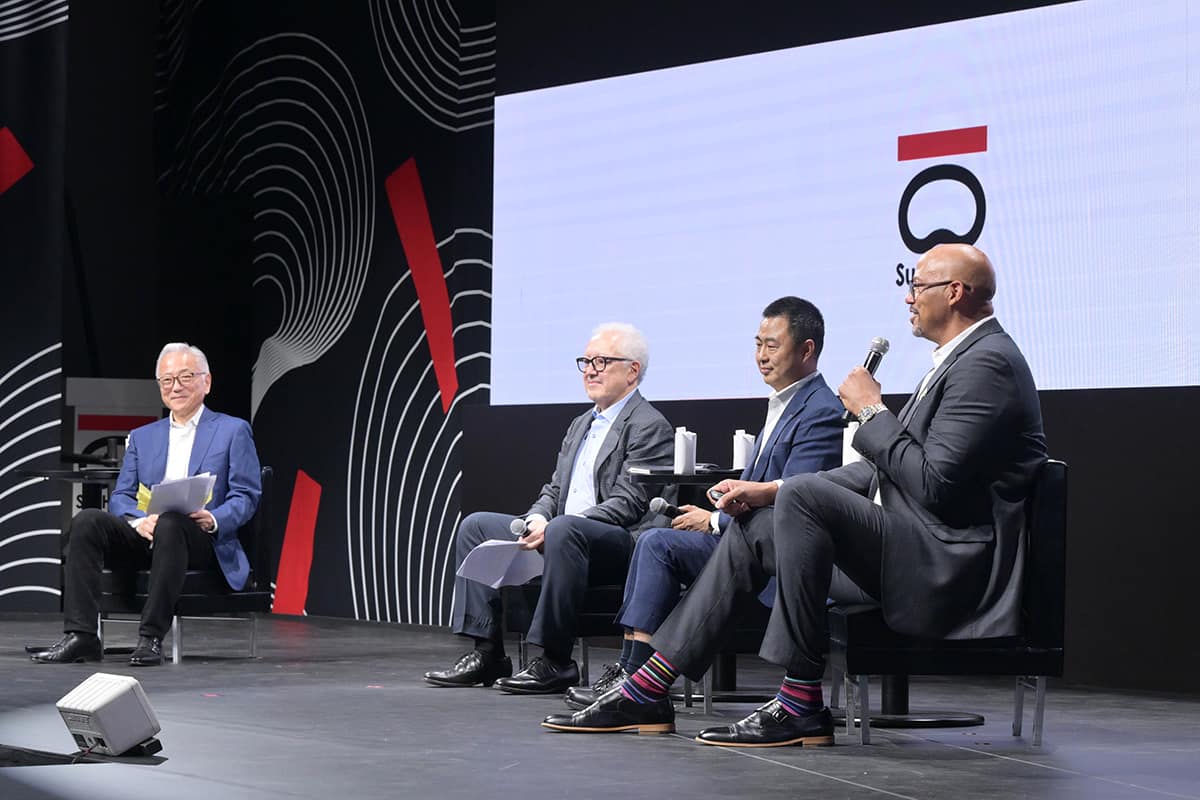
One of the standout sessions at SusHi Tech Tokyo 2026 was “The Next Phase of AI: From Infrastructure to Impact.” The panel brought together Howard Wright of NVIDIA and Rob Chu of Amazon Web Services (AWS)—two major forces in AI infrastructure—along with Eric Benhamou of Benhamou Global Ventures (BGV), a Silicon Valley investor in AI-native companies. Moving beyond the hype surrounding the technology, the speakers examined what is already working in practice and where broader use is taking hold.
At the outset, Sakamoto said AI adoption was no longer in the early experimentation phase. In his view, the next phase would center less on building infrastructure for model training and more on using AI at scale across business and society. The goal is to deliver measurable social and economic impact.
That framing made the central question clear: not which model performs best, but how organizations can embed AI in real-world operations and deliver concrete outcomes.
NVIDIA’s “Five-Layer Cake”
Wright likened the architecture supporting AI to a “five-layer cake.” At the base are the physical requirements of data centers: land, electricity, and buildings. Above that are chips and computing platforms, followed by models—the system’s “brain”—and, at the top, applications used in products and services. Together, these layers form the AI stack.
The analogy underscores a simple point: semiconductors alone cannot deliver business value. Cloud providers, model builders, application teams, startups, and investors must coordinate across the stack to translate the technology into industry-specific results.
“NVIDIA is not simply a chip company. We are a solutions provider and an AI infrastructure partner. We collaborate closely with AWS and AI companies worldwide to support the broader ecosystem.”
AWS Puts AI Agents at the Top of the Stack
Chu reframed Wright’s model through an enterprise lens, placing AI agents at the top.
“For businesses, AI agents are the most important layer. They will serve as digital workers, operating around the clock alongside human employees and creating value for the organization.”
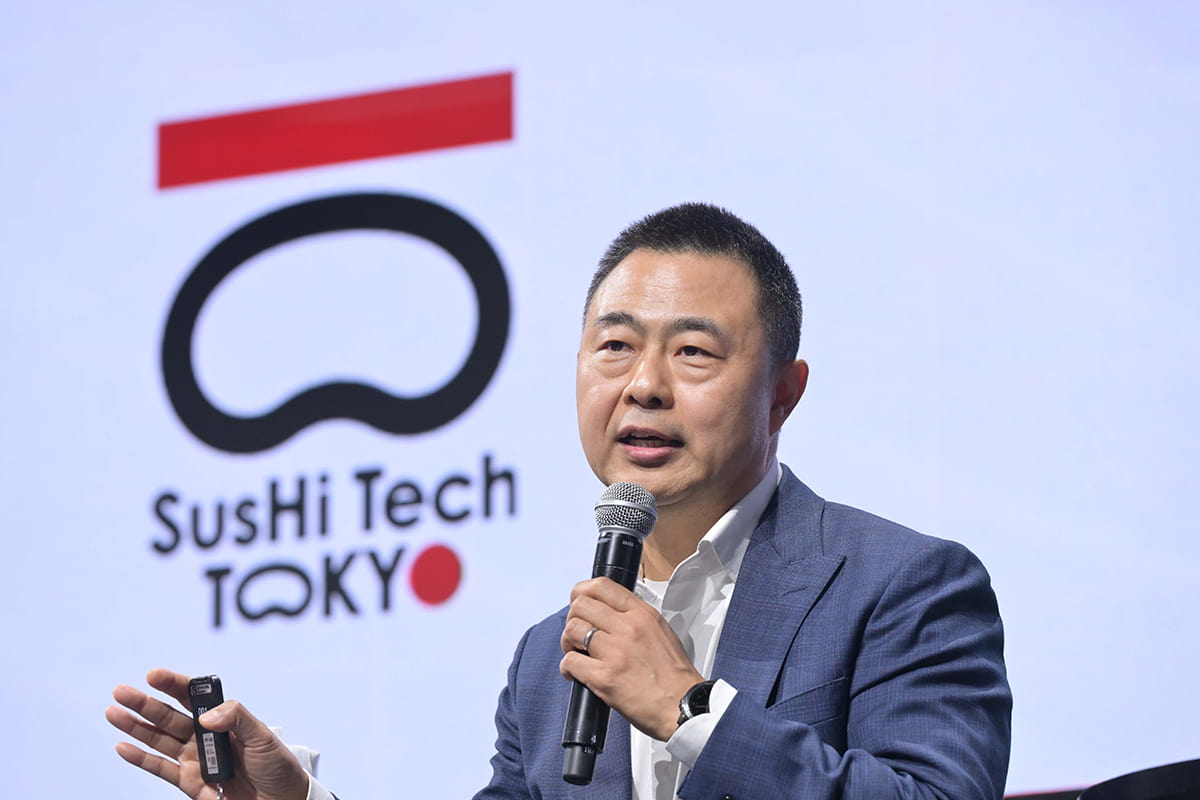
Rob Chu, Vice President and Co-Managing Director, Asia Pacific, Japan, and China, Amazon Web Services
Orchestration becomes more complex, however, as their numbers increase.
“A handful of agents is relatively easy to manage. Once an organization has hundreds, thousands, or tens of thousands, it needs a platform to govern and continuously improve them.”
Chu highlighted the data and knowledge layer. The effectiveness of those agents depends on how well an organization uses its proprietary information and expertise, not simply on the underlying model.
“Data and knowledge are a company’s secret sauce.”
Applications Drive the Next Wave of Value
Benhamou placed the AI stack in a broader historical context. Major technologies, he observed, reach society in successive waves.
“The first wave is infrastructure. The second is everything built on top of it: operating systems, software, and service providers. The third is applications.”
This framework helps explain where AI stands today. GPUs, cloud platforms, and models command much of the attention, but the greatest business and social gains will come from applications embedded in workflows and customer interactions.
“The third wave usually creates far more value than the first two. Netscape introduced the browser; a few years later, companies such as Amazon, eBay, Netflix, and Salesforce emerged. The application wave should be enormously important for AI.”
Chu expects the application layer to capture a growing share of value. Although AWS continues to invest heavily in infrastructure, he believes businesses will begin to realize practical returns as AI agents become widely deployed.
Managing agents at that scale will require dedicated platforms.
“Just as companies have teams that support their employees, every business will eventually need an HR system for AI. An AI agent platform would fill that role.”
Japan’s Opportunity in Physical AI
The discussion moved onto the next frontiers of deployment. Sakamoto asked which emerging fields—including physical AI and humanoid robotics—had reached a practical stage.
Wright did not single out one sector. Instead, he expected AI to reshape robotics, healthcare, life sciences, fintech, nuclear fusion, quantum computing, and other fields. In each, it can accelerate innovation and improve how data is applied.
Turning to Japan, Chu offered a more concrete assessment of the country’s prospects in physical AI, a field focused on systems that perceive their environment, make decisions, and act in the physical world.
“Japan has deployed industrial robotics at scale for decades. By integrating AI into that foundation, the country can establish a very strong position in physical AI. Social challenges such as an aging population and labor shortages are driving demand for these systems.”
Benhamou pointed to startups already making progress in this area. One BGV portfolio company uses AI to identify recyclable materials and control the robots that sort them.
Will AI Take Our Jobs?
The impact of wider AI adoption on employment is becoming harder to ignore. Sakamoto raised what he called AI’s “darker side.” Wright responded with a line often used by NVIDIA President and CEO Jensen Huang.
“AI will not take your job. Someone who understands it and knows how to use it might.”
Wright’s point was that AI should extend human capabilities rather than replace them.
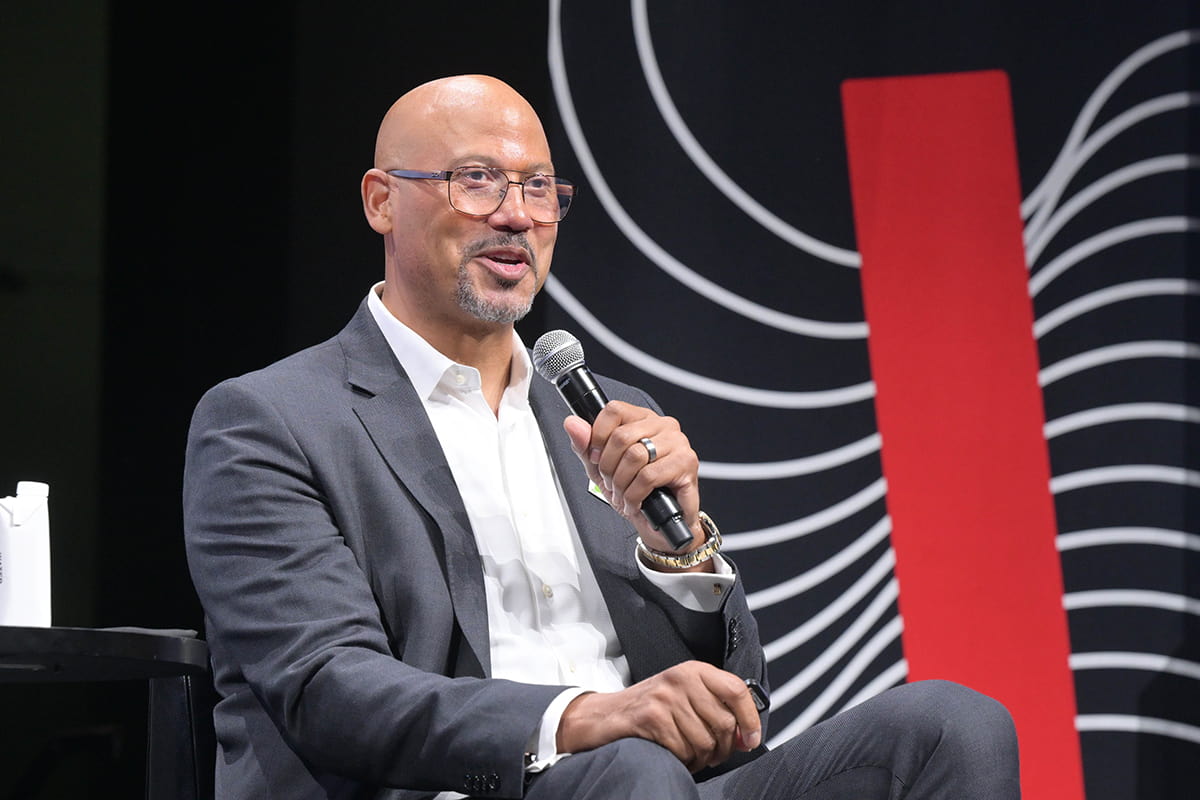
Howard Wright, Vice President, Startup Ecosystem, NVIDIA
“We need to make AI accessible beyond a small group of companies and experts—to founders, investors, and employees. This transformation is unprecedented in scale. It marks a turning point comparable to electrification, and how we use AI—and who gets to participate—will shape economies worldwide.”
Japan Can Be a Creator, Not Just a Consumer, of AI
Sakamoto then raised the risk that Japan could revert to a “Galapagos” model of isolated development. Wright and Chu, however, believed the country was well positioned to play a distinctive role in the AI era.
Wright was particularly optimistic about Japan’s entrepreneurial culture and engineering strengths. NVIDIA’s network includes more than 400 companies across the country.
“Japan’s technical capabilities are expanding. Significant advances are underway in cybersecurity, healthcare, life sciences, and many other areas. Among the startups we support, some could become unicorns or emerge as global leaders.”
Wright stressed that Japan is more than a market for AI.
“Japan can become a creator of AI and a major player in shaping its future.”
Chu identified Japan’s industrial base and operational expertise as core assets. The depth of its manufacturing sector, disciplined execution, and exacting standards give the country an advantage in putting AI into practice. Yet if those qualities harden into perfectionism, Japan risks losing momentum.
“Japan has a culture of continuous improvement and a strong commitment to quality in day-to-day operations. That combination is rare globally. At the same time, companies must deploy early and learn from real-world use rather than wait for perfection.”
Benhamou echoed the call to avoid the isolation associated with Japan’s past “Galapagos syndrome.” He said the country could engage more closely with international markets while building on its own strengths.
“Japan holds all the cards it needs. It can lead in areas that AI will transform, including robotics, manufacturing, elder care, and food services. The time is now.”
AI Becomes a Management Priority, Not Just a Technology Issue
In closing, Chu described how AI’s role is evolving.
“AI is no longer just a technology. It is about how companies operate and create value. The next step is to deliver tangible results from the infrastructure already in place, with AI agents serving as the bridge.”
Wright identified access as a key to faster adoption.
“Access takes different forms across the ecosystem. Developers require code and SDKs, new ventures depend on venture capital, and established companies need opportunities to collaborate with startups. Stronger links among these groups will accelerate implementation and new business creation.”
AI has become a business and societal issue, not merely a subject for researchers and technology companies. The real test is whether it can be embedded in corporate workflows, industrial settings, and efforts to address social challenges. The message from NVIDIA and AWS was clear: model performance alone is not enough. Organizations must be able to deploy AI effectively, run it at scale, and engage with global ecosystems.
Speaker Profiles
Click here for SusHi Tech Tokyo 2026 event details